

Kilimanjaro Summit
The roof of Africa is calling
The story of the trip
The roof of Africa is calling.
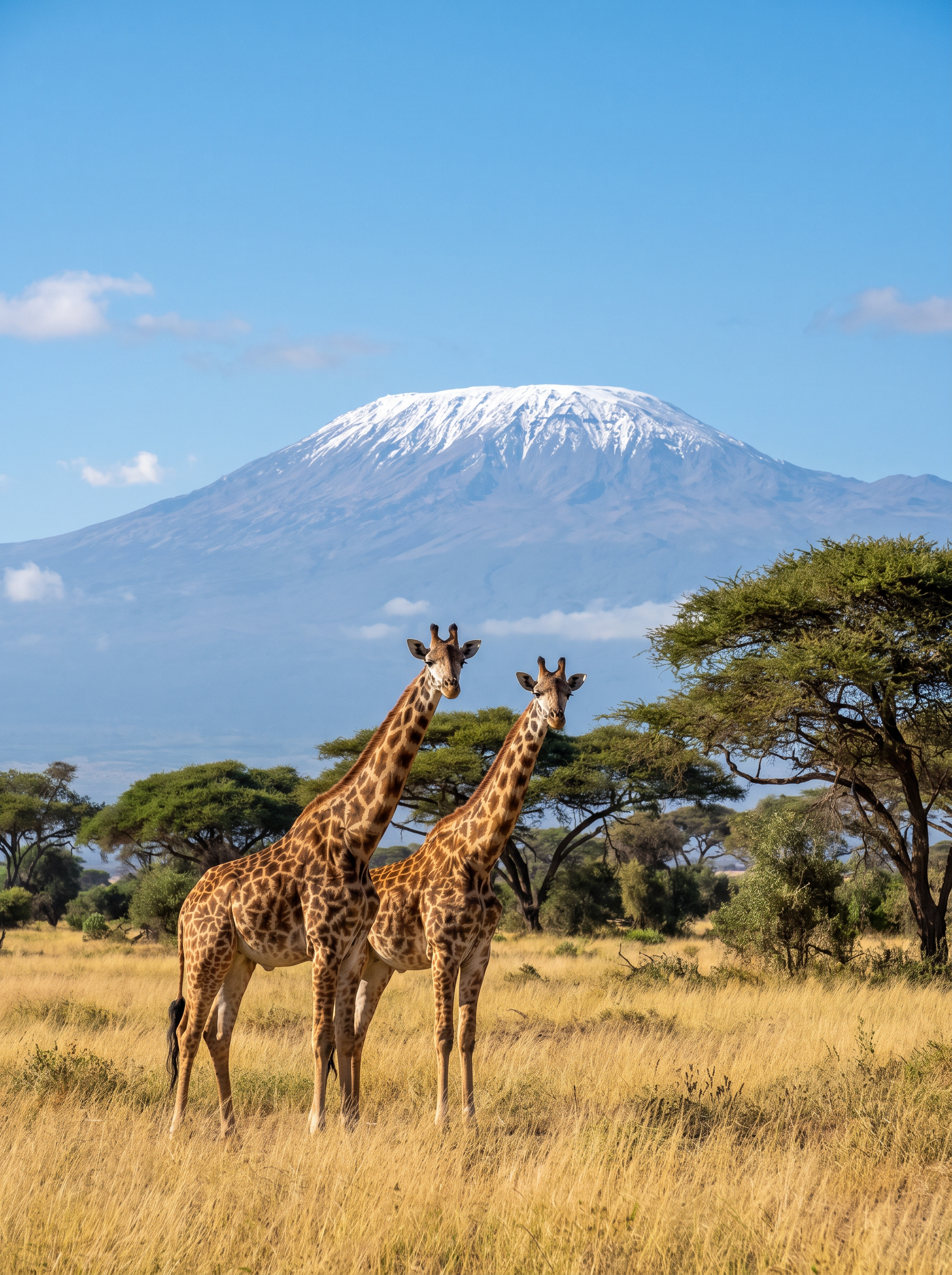
Mount Kilimanjaro is Africa's highest mountain and the world's tallest free-standing peak at 5,895 metres. We ascend via the Machame Route, crossing five distinct climate zones — from tropical rainforest to alpine desert to the snows of the summit — and descend via the Mweka Route. After the crowning moment at Uhuru Peak at sunrise, we close the journey with a day of rest and relaxation in Arusha before departure. Nine full days of camping, challenge, and discovery.
The route, day by day
Tap any day to see its details.
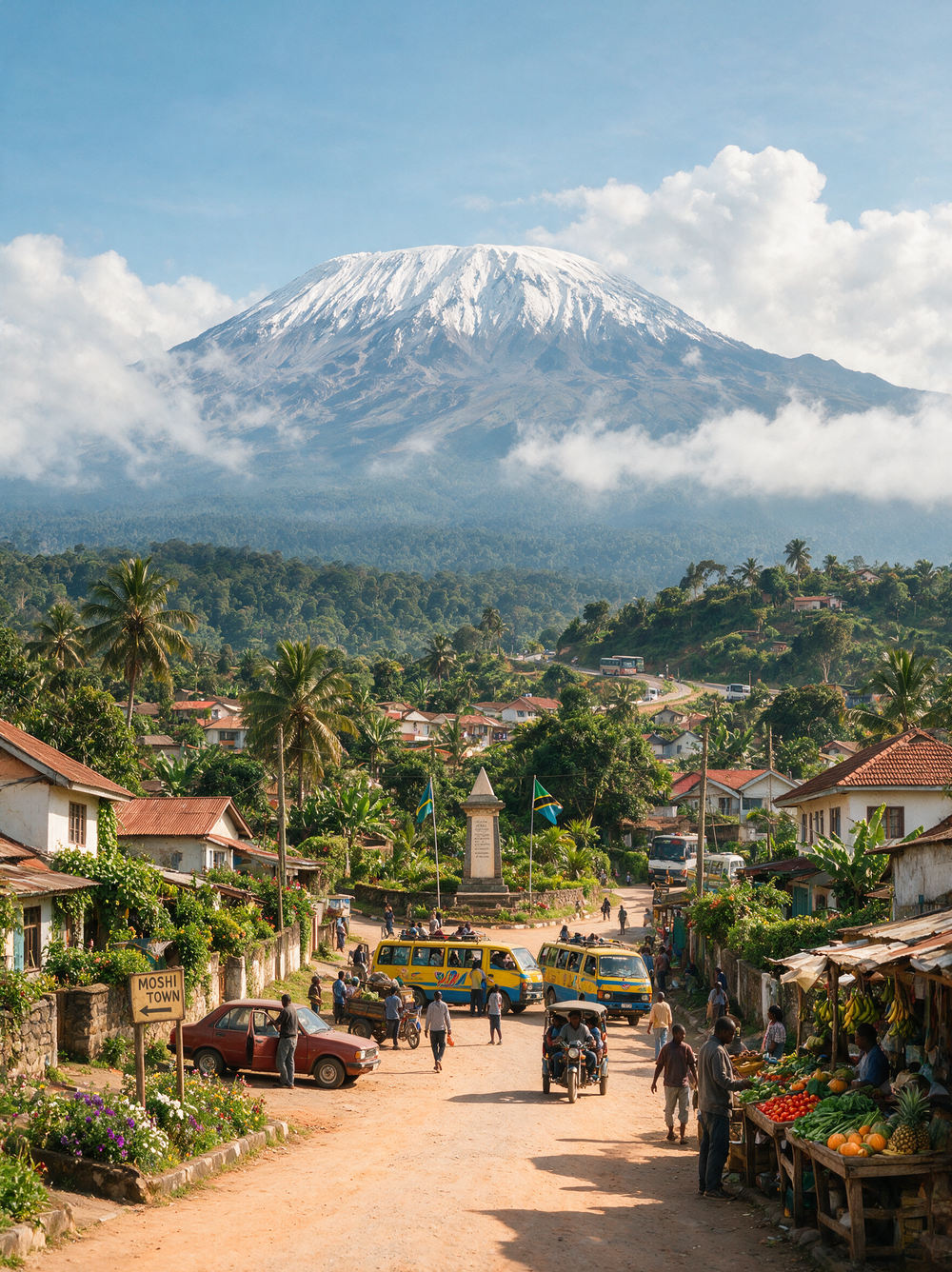
You arrive at Kilimanjaro International Airport, where our team welcomes you and transfers you to your hotel in Moshi at the foot of the mountain. A day set aside for rest, adjusting to the time difference, and getting to know the rest of the group. In the evening we meet the Omani trip leader and the Tanzanian lead guide for a full briefing and gear check before setting off the next morning.
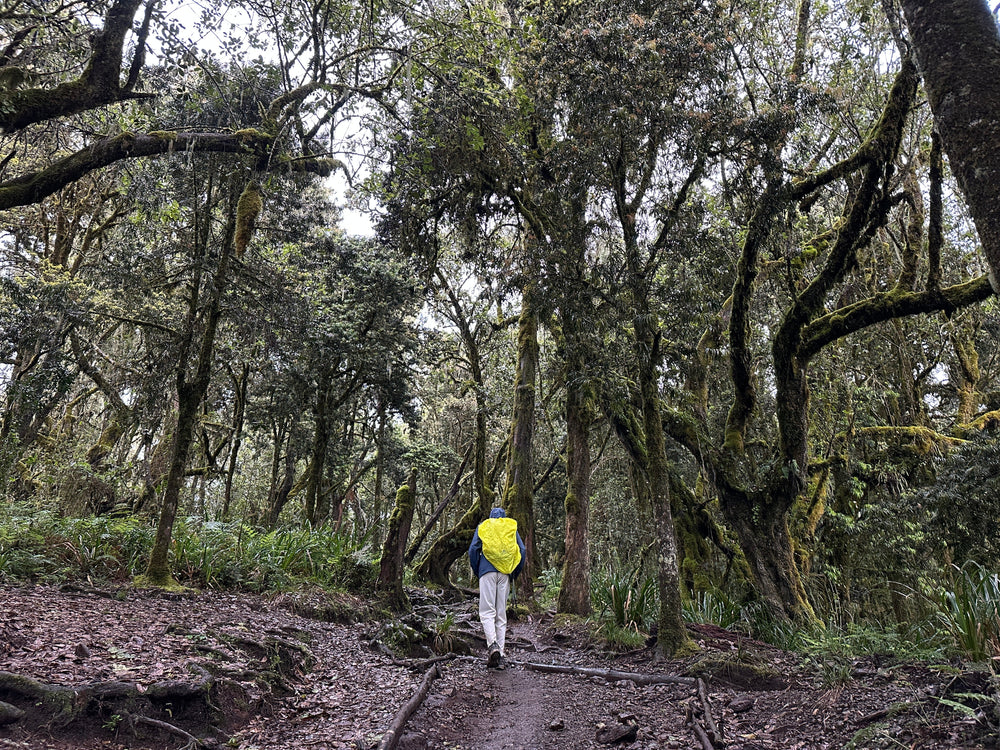
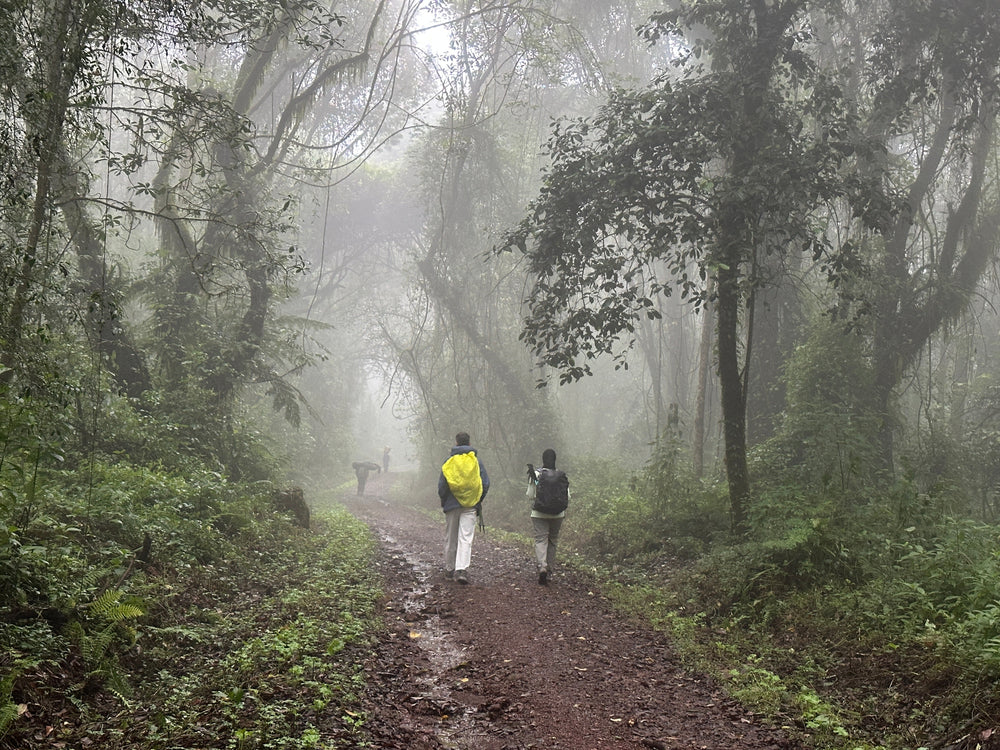
The adventure begins! After breakfast we head to Machame Gate to complete the national park formalities, then set off through dense rainforest where giant moss-covered trees intertwine and the sounds of wildlife surround us. A gradual walk that prepares the body for altitude, ending at Machame Camp on the forest's edge for the first night on the mountain.
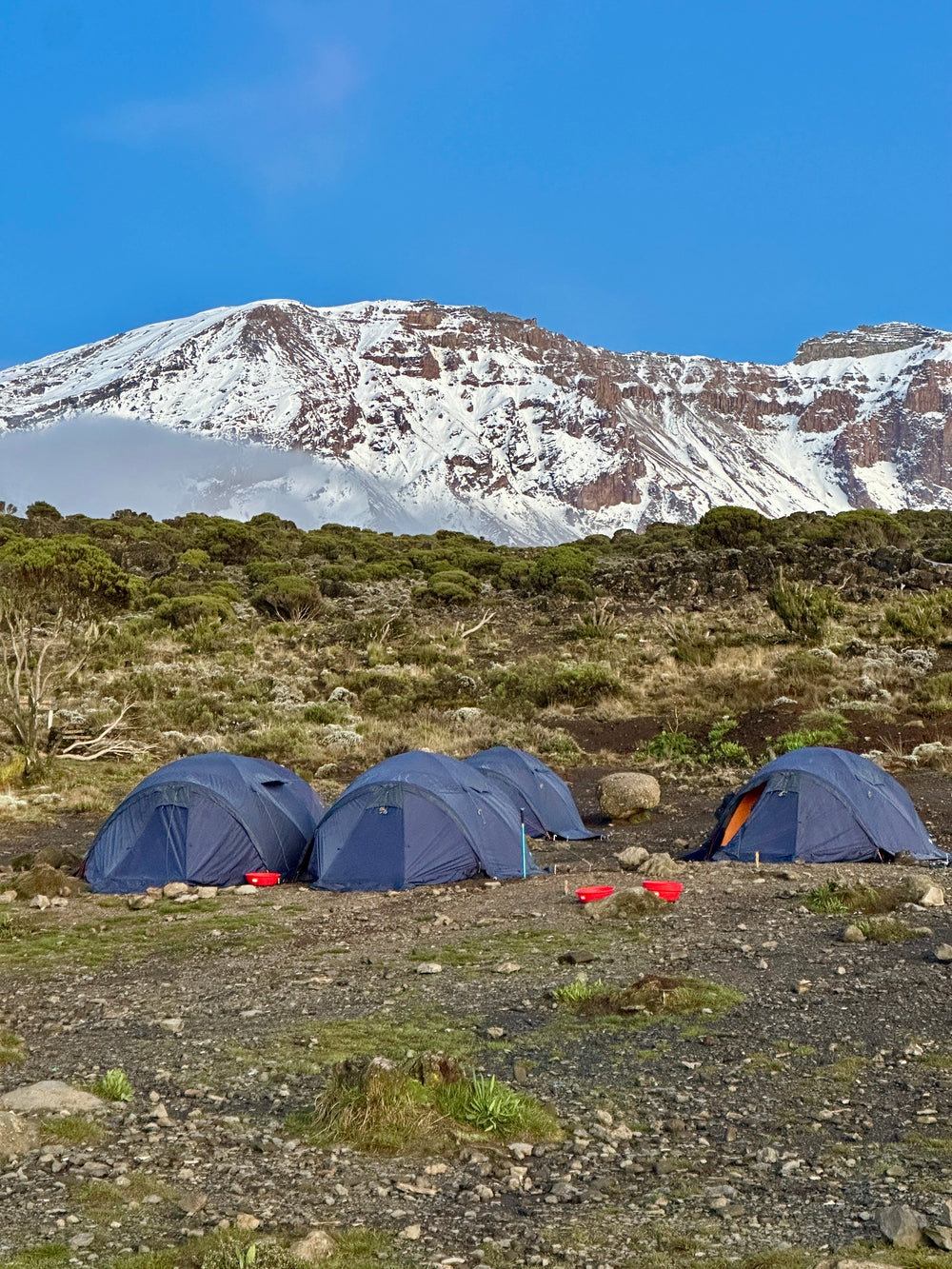
We bid farewell to the rainforest as the scenery gradually shifts to moorland — giant heather plants and sweeping views over the plateau. Though today's distance is short, the altitude gain is significant, so we keep a gentle pace that supports acclimatisation. By afternoon we reach lofty Shira Camp with its enchanting panoramic views.
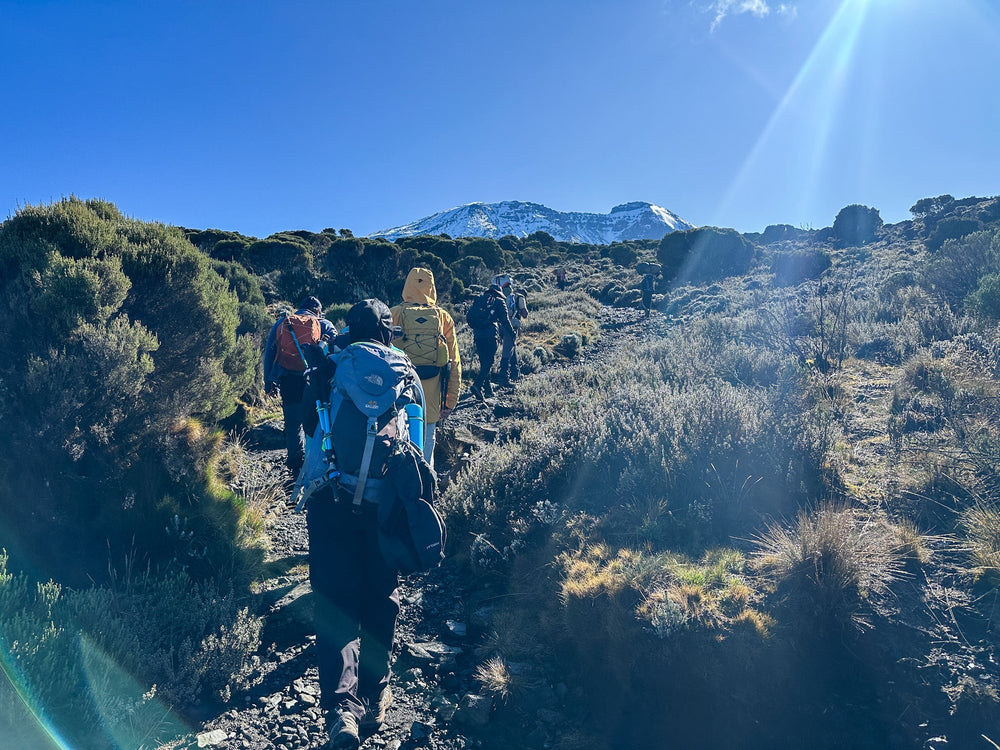
A pivotal acclimatisation day. We climb towards Lava Tower, passing 4,600 metres, then descend to Barranco Camp in the 'climb high, sleep low' style that helps the body adapt to thinner air. The terrain turns to semi-arid desert shaped by the wind over time, and camp stands in a dramatic valley beneath the famous Barranco Wall.
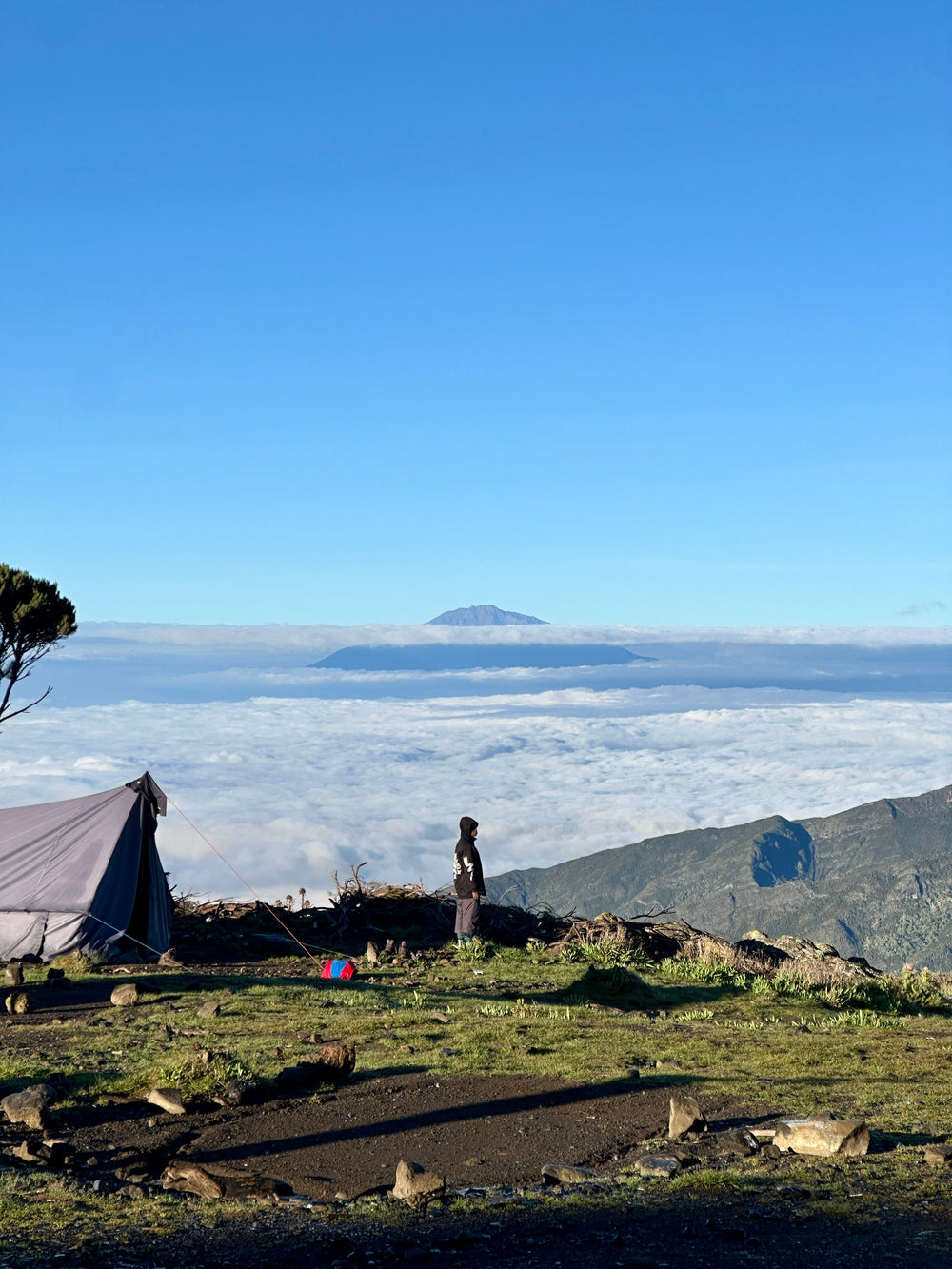
The day begins with the famous Barranco Wall — an enjoyable hands-on scramble that looks harder than it really is, rewarding you with stunning views and a true sense of achievement. From there the trail winds through alpine desert to Barafu Camp, where the southern circuit is complete and the peaks of Mawenzi and Kibo appear together before us.
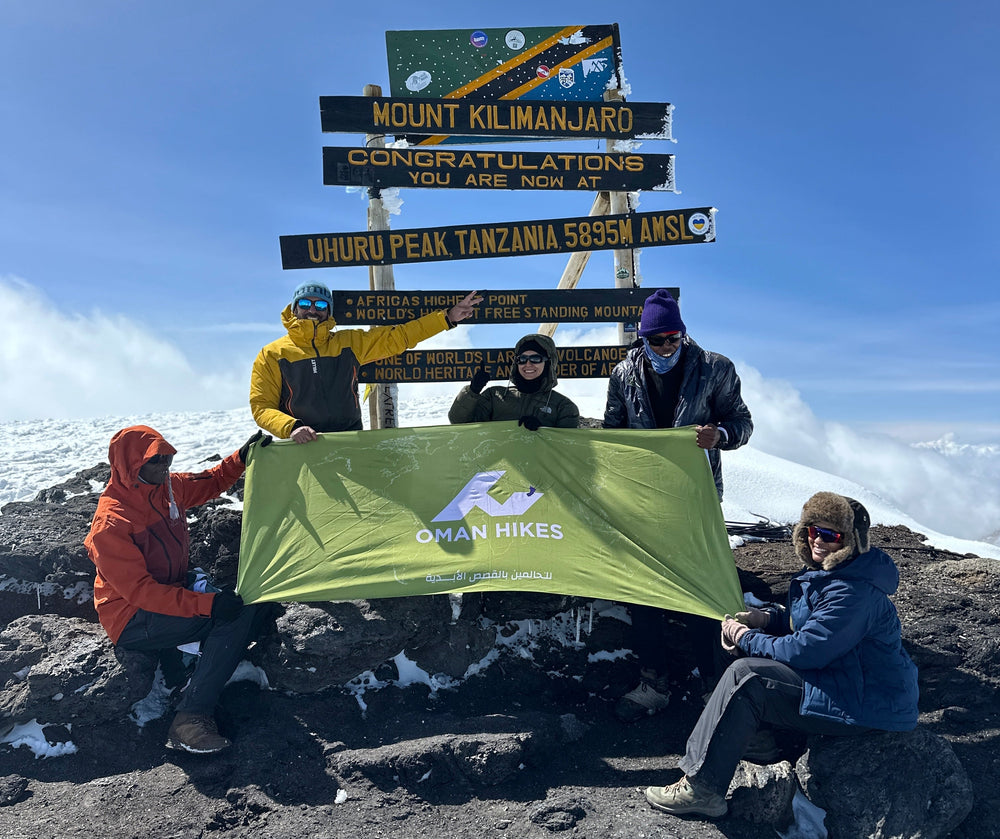
Summit night. We set off in the small hours beneath a star-filled sky, on a slow, steady climb through arctic conditions that demands patience and quiet determination. At sunrise we reach Uhuru Peak, the highest point in Africa (5,895 m) — a moment earned step by step, breath by breath. After celebrating at the summit we begin the long descent to Mweka Camp for the last night on the mountain.
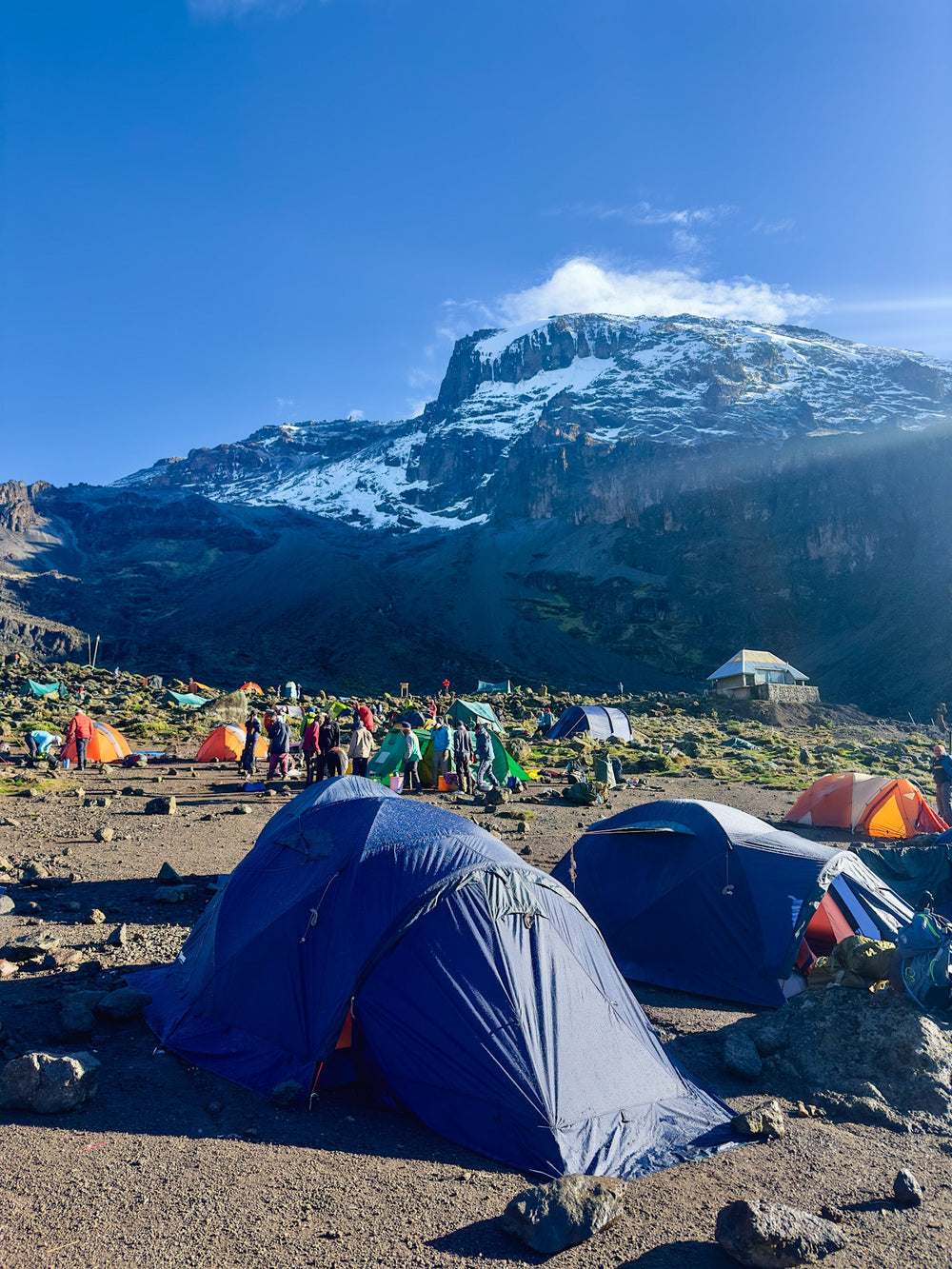
A final descent through dense rainforest — a striking contrast after days in the barren heights. A gentler trail that gives you space to reflect on your journey: the challenges you overcame and the friendships you made. At Mweka Gate we celebrate the achievement together before returning to Moshi, where a hot shower, a comfortable bed, and a well-earned shared meal await.
A completely unscheduled day. Sleep in, enjoy a quiet breakfast, and give your body the time it needs to recover. Relax at the hotel or explore Arusha's markets and local cafés. It's also a chance to reflect and share stories with the rest of the group — the summit may be behind you, but its impact keeps unfolding in the days ahead.
After breakfast it's time to bid Tanzania farewell. Depending on your flight time, you'll be transferred to Kilimanjaro International Airport for the journey home. You leave carrying more than memories: the strength you discovered in yourself, the friendships you formed, and the quiet confidence you earned on the mountain.
Challenging — For hikers with high fitness
What's included and what's not
Included⌄
- Transfers (airport – hotel – mountain gate – Arusha)
- Three daily meals and drinking water during the climb
- One hotel night in Moshi before the ascent
- One hotel night in Arusha for the rest day (day eight)
- Twin-share tent accommodation with full camping equipment
- Consultations before and during the trip
- An Omani leader from OmanHikes
- A certified Tanzanian guide and porter team
- Kilimanjaro National Park fees
Not included⌄
- International flights
- Tanzania visa (on arrival, about $50)
- Personal trekking gear
- Snacks and personal expenses
- Travel and rescue insurance
- Tips (typically high for Kilimanjaro porters)
- Single hotel rooms
What to bring
Documents and spending⌄
- Passport — Original plus a separately stored copy
- Required entry documents — For your nationality; check with the team before travel
- Travel insurance document — Check trekking cover to 5,895 m, evacuation and rescue
- Bookings and itinerary — Flight and accommodation details; save offline
- Cash and payment card — Small denominations for personal expenses
Bags and waterproofing⌄
- Daypack — 30–40 L for water, layers and snacks while climbing
- Expedition duffel — Soft porter-carried bag; maximum 15 kg
- Backpack rain cover — Sized to fit your pack
- Waterproof dry sack — Use suitable sizes; keep summit clothing completely dry
- Secure valuables pouch — For cash and documents
Footwear and climbing essentials⌄
- Hiking boots — Waterproof and broken in, with room for warm socks
- Trekking poles — One adjustable pair
- Boot gaiters — One pair to keep grit, mud and snow out
- Headlamp — Reliable summit-night light with spare batteries
- Lightweight rest shoes — For accommodation and rest after the day
- Spare boot laces — One pair sized for your boots
Daily hiking clothing⌄
- Trekking trousers — 2 pairs, lightweight and quick-drying
- Quick-dry T-shirt — 3 lightweight shirts; avoid slow-drying cotton
- Long-sleeved shirt — 1–2 shirts for sun and forest sections
- Hiking socks — 4 hiking pairs; rotate and keep one pair dry
- Clothes for cities and accommodation — One outfit for the hotel before and after the climb
Warm layers and summit night⌄
- Thermal top and leggings — One trail set plus a dry summit-night set
- Fleece jacket — An insulating midlayer
- Insulated padded jacket — Heavy hooded winter jacket suitable for summit night
- Insulated summit trousers — Warm padded overtrousers for summit night
- Wool beanie — Covering the ears
- Liner and outer gloves — Light liners plus very warm waterproof outer gloves
- Warm wool socks — One thick summit pair and one dry rest pair; check boot fit
- Neck gaiter — Cover the neck and face against summit cold and dust
Rain and wind shells⌄
- Rain jacket — Waterproof and windproof, with a hood
- Rain trousers — Shell layer worn over trekking trousers
Sun protection⌄
- Sun hat — Lightweight, with a retaining cord
- Sunglasses — With UV protection
- Sunscreen — High protection for face and hands; easy to carry
- Lip balm — A small container for dry lips
Water and trail energy⌄
- Two water bottles or hydration bladder — At least 3 L total capacity, including a wide-mouth bottle
- Insulated water bottle — An insulated bottle for summit night; protect water from freezing
- Energy snacks — Small daily portions and easy-to-eat summit-night snacks
- Electrolytes — Optional individual sachets according to your needs
Personal medication and first aid⌄
- Personal medication — Enough for the trip, in original packaging
- Personal first-aid kit — Plasters, blister dressings and gauze
Personal care⌄
- Toiletry bag — Travel-size soap, shampoo and deodorant
- Toothbrush and toothpaste — Travel size
- Toilet paper — Small roll in a dry bag
- Wet wipes — Small pack; carry used wipes out
- Hand sanitiser — Pocket size
- Skin moisturiser — Small container suited to your skin
- Light hand towel — Quick-drying microfibre
- Reusable laundry bag — Reusable, to separate worn clothing
Devices and charging⌄
- Phone, charger and cable — Download maps, bookings and team contacts for offline use
- Power bank — At least 10,000 mAh, with cable
- Universal travel adaptor — Compatible with your chargers
- Camera and spare batteries — Optional; keep in a dry bag
Useful extras⌄
- Insect repellent — For Moshi and the lower forest section
- Earplugs — Optional for accommodation and transfers
Everything you need to know
General⌄
What makes the Kilimanjaro Summit trip special?+
Kilimanjaro is the world's tallest free-standing mountain and Africa's highest peak (5,895 m). The route offers rare climatic variety: in a single ascent you pass from rainforest to moorland to semi-arid desert and finally arctic desert at the summit — with fully Omani leadership and a certified local Tanzanian team beside you every step of the way.
Is the climb safe?+
Yes — safety is our highest priority. An Omani leader from OmanHikes accompanies you, alongside a certified Tanzanian team trained to handle altitude-related conditions. Emergency oxygen, a first-aid kit, and an evacuation plan are available throughout the route.
Do I need extra cash during the trip?+
Most costs are covered in the trip price. The main cash you'll need is tips for the porters, cooks, and guides (usually around 200 USD), plus any personal expenses or souvenirs in Arusha.
Do I need vaccinations before travelling?+
Yes. A yellow fever vaccination is required to enter Tanzania, and typhoid and hepatitis A and B vaccines are also recommended. Check with your doctor or a travel clinic well before departure for the full recommended list.
Is medical insurance included? Do I need it?+
Medical and evacuation insurance are not included in the trip price, and insuring yourself before travel is essential. We recommend a policy covering air evacuation from altitudes up to 6,000 m, given the high-altitude nature of this trip.
Fitness & Route⌄
Do I need previous climbing experience?+
No technical climbing experience is needed. Kilimanjaro is a trekking peak, not a technical climb — but good physical fitness and comfort walking on consecutive days are essential.
How hard is the ascent?+
A genuine challenge. Daily hiking ranges from 7 to 19 km, with ascents of up to 8 hours, and summit night alone takes 13–15 continuous hours in cold, high-altitude conditions. Good preparation and the right pace make the goal achievable for anyone with determination and fitness.
Which route do we take, and what are the summit chances?+
We follow the Machame Route, known for its high success rates thanks to its gradual acclimatisation profile (two days of 'climb high, sleep low'). Our local team puts safety and correct pacing first to maximise your chances of reaching Uhuru Peak.
How should I prepare physically?+
Focus on consistency, not intensity. In the weeks before the trip, take long hikes on hilly terrain, strengthen your legs and core, and add cardio sessions to your weekly routine.
How will the altitude affect me?+
Altitude affects everyone differently, regardless of fitness level. The route and daily pace are designed specifically to support gradual acclimatisation, and the leadership team monitors your condition continuously throughout the climb.
Gear & Accommodation⌄
What clothing and gear should I bring?+
A complete gear list is available in the What to Bring section above, and we'll also send you a detailed guide as soon as your registration is confirmed.
What's the food like on the mountain?+
Full meals three times a day, prepared by the Tanzanian team's cooks — rich in carbohydrates and protein to fuel the climb. We cater for any allergies or special diets if you let us know in advance.
Is tent accommodation shared?+
Yes, the default is twin-share tents. A single tent can be arranged on advance request, subject to availability — as can single rooms at the Moshi and Arusha hotels before and after the climb.
What are the bathroom facilities like at the camps?+
Private toilets for our group are available at every camp on the route, ready to use as soon as we arrive at each overnight site.
Refund summary on withdrawal
Read the full Risk & Cancellation Policy before registering.
Moments from the trip


Where the trip takes place
Trip highlights

Uhuru Peak, 5,895 m at sunrise
We set off in the small hours beneath a star-filled sky, and at sunrise we stand on the highest point in Africa — a moment earned step by step, breath by breath.

Climbing the Barranco Wall
An enjoyable hands-on scramble that looks harder than it really is, rewarding you with stunning views and a true sense of achievement before reaching Barafu Camp.

Five climate zones on the Machame Route
From dense rainforest to alpine desert to the snows of the summit — the scenery transforms around you every day on one of Kilimanjaro's most beautiful routes.