


The Silk Road
From the domes of Samarkand to the Hissar Mountains.
The story of the trip
Designed for lovers of history and culture — and for trekkers drawn to the cultural depth of Transoxiana.
From the domes of Samarkand and the minarets of Bukhara to the heights of the Hissar Mountains on the Uzbek–Tajik border. A journey that goes beyond mountain trekking into the heart of Uzbek society.
The route, day by day
Tap any day to see its details.
You arrive in Tashkent, the capital of Uzbekistan, where the team welcomes you and transfers you to the hotel. After a rest we stroll through Independence Square and ride the famous Tashkent metro with its palace-like decorated stations, and in the evening we hold a briefing on the group and the days ahead.
We board the Afrosiyob high-speed train to Samarkand, the jewel of the Silk Road. After lunch we stand before the majestic Registan Square with its three madrasas and turquoise domes — one of the greatest Islamic squares in the world — staying on for its enchanting evening illumination.
A full day in Samarkand: the Shah-i-Zinda funerary avenue with its cascading blue domes, the Gur-e-Amir mausoleum where Tamerlane rests, and the Bibi-Khanym Mosque, once the largest in the world. We finish at the bustling Siyob Bazaar to taste Samarkand's famous bread and dried fruits.
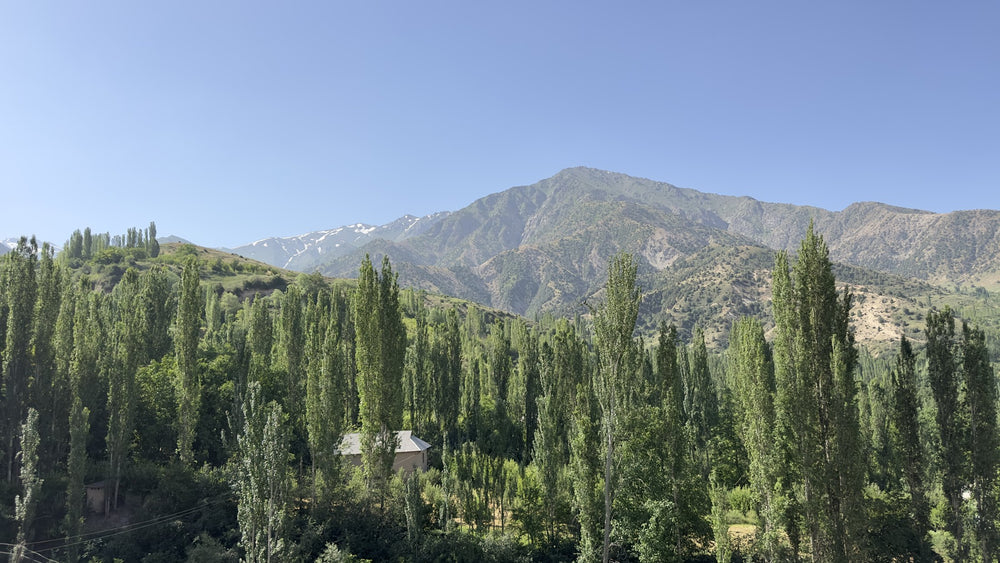
We leave the cities behind and head south to the Hissar Mountains on the Uzbek–Tajik border. We reach mountain villages unchanged for centuries and begin with a light get-to-know-you walk around the village, among orchards and streams, then sleep in a warm family guesthouse with a traditional Uzbek dinner.
The first full walking day: a trail following the valley upward through walnut and mulberry terraces to tiered mountain waterfalls, where shepherds meet their flocks in the high pastures. Lunch in nature, Uzbek style, then an evening return to the village.
The mountain high point. We climb gradually to the trip's highest point at 2,232 m, where the Hissar ranges stretch as far as the eye can see towards Tajikistan. In the evening we sit with the villagers over tea and plov — this community depth is the heart of the trip.
We bid the mountains farewell and stop in Shahrisabz, Tamerlane's birthplace, to visit the ruins of the legendary white Ak-Saray Palace, then continue across the steppe to Bukhara — the city that was the scholarly heart of the Islamic world for centuries.
A full day in old Bukhara: the Kalyan Minaret that so awed Genghis Khan he spared it, the majestic Ark Fortress, and the covered bazaars where craftsmen work as their ancestors did. We end the day at the historic Lyab-i Hauz pool beneath ancient mulberry trees.
A free morning for shopping: hand-woven carpets, blue ceramics, and authentic Uzbek silk. After lunch, time to relax in the heritage cafés, and in the evening a celebratory farewell dinner reliving the journey's moments, from the domes of Samarkand to the peaks of Hissar.
After breakfast we transfer to the airport for the flight home. You leave Transoxiana carrying an unrepeatable blend: the scent of history in Samarkand and Bukhara, and the calm of the Hissar Mountains and the hospitality of their people.
Easy
What to bring
A detailed packing list for this trip. Clothing quantities are suggestions; adjust them to your needs and laundry plans.
Travel documents 2
Core equipment 4

Layers & clothing 3
Accessories 4
Health 3
Everything you need to know
General⌄
What makes the Silk Road trip special?+
A rare blend of historical and cultural depth (Samarkand and Bukhara, turquoise domes and ancient bazaars) with gentle days of walking through Hissar mountain villages unchanged for centuries — a journey for both trekking and history.
Is the trip suitable for beginners?+
Yes. It's rated easy and is ideal for a first experience of group travel and light hiking — most days combine cultural tours with short, non-technical walks.
Do I need a visa?+
Yes, an Uzbekistan visa is required and is listed under Not Included. We'll send you the details and required documents after registration.
Do I need extra cash?+
We recommend carrying some local currency (Uzbek som) for the bazaars of Samarkand and Bukhara and for souvenirs, as some small shops don't take cards.
Fitness & Route⌄
Do I need a high fitness level?+
No — the trip is rated easy. Walking days in the Hissar Mountains are moderate in distance (6–14 km) and non-technical, and the highest point on the route is only 2,232 m.
How many actual walking days are there?+
Three days of gradual mountain walking in the Hissar villages, while the remaining days are devoted to cultural tours in Tashkent, Samarkand, Bukhara, and Shahrisabz.
Do I need prior training?+
Good basic fitness is enough. Regular 30–45 minute walks in the weeks before the trip will let you fully enjoy the walking days.
Gear & Accommodation⌄
Where do we sleep during the trip?+
A mix of hotels in the historic cities (Tashkent, Samarkand, Bukhara) and family-run mountain guesthouses in the Hissar villages — an authentic taste of Uzbek hospitality.
Are there any dress considerations?+
We recommend bringing a light scarf or shawl to cover the shoulders when visiting mosques and religious sites, out of respect for local customs.
What gear do I need to bring?+
A daypack, comfortable walking shoes, a wide-brimmed hat, and strong sunscreen — the full list is in the What to Bring section above.
Refund summary on withdrawal
Read the full Risk & Cancellation Policy before registering.
Where the trip takes place
Trip highlights

Samarkand: Registan Square and the domes of Transoxiana
We wander among the Registan madrasas and Samarkand's turquoise domes — the legacy of Timur and the Silk Road at its most splendid.

Old Bukhara and its minarets
A living medieval city: the Kalyan Minaret, covered bazaars, and merchants' tales along the Silk Road.

Trekking the Hissar Mountains
From the historic cities to the heights of the Hissar Mountains on the Uzbek–Tajik border — a mountain walk that touches the depths of Uzbek village life.